Ranthambore in Monsoon: Expert Travel Tips for Your Trip

The Ultimate Weekend Guide for Your Ranthambore Getaway
May 7, 2026
Ranthambore from Delhi: The Complete Wildlife Travel Guide
September 10, 2026
The iconic Ranthambore National Park is widely celebrated for its rugged landscapes and thrilling tiger safaris. While most travelers flock to the park during the cool winter months, there is a hidden, lush side of the forest that many overlook. Visiting Ranthambore in monsoon offers a unique, serene perspective that stands in stark contrast to the dust-blown, heat-heavy summer months. If you are an offbeat traveler who appreciates emerald landscapes, dramatic clouds, and a quiet retreat into nature, this season might just be your favorite time to visit.
Understanding the Monsoon Season in Ranthambore
Before you pack your bags, it is essential to understand the climatic shift that occurs in the region. The monsoon season in Ranthambore typically spans from July to September. During these months, the arid, golden landscape of Rajasthan undergoes a miraculous transformation, turning into a vibrant, lush paradise.
The humidity rises, the air cools, and the forest comes alive with the sound of rain-fed streams and bird calls. While many assume that the best time to visit Ranthambore is strictly during the winter, the monsoon period provides a refreshing alternative for those who prefer solitude over crowds. It is a time when the forest breathes, the flora flourishes, and the entire ecosystem resets itself.
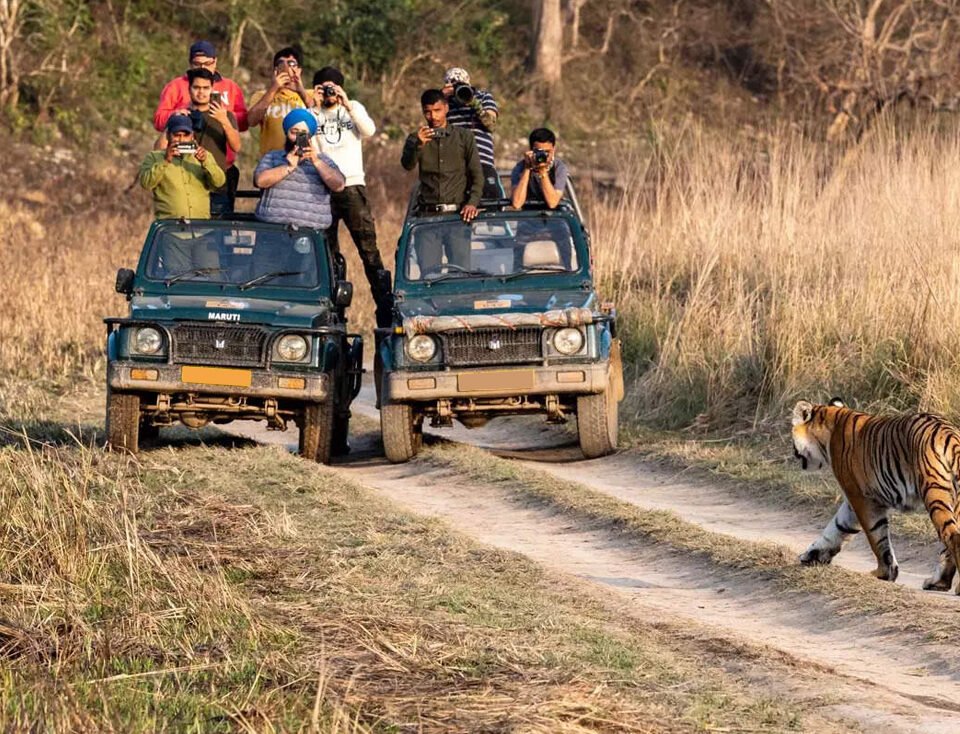
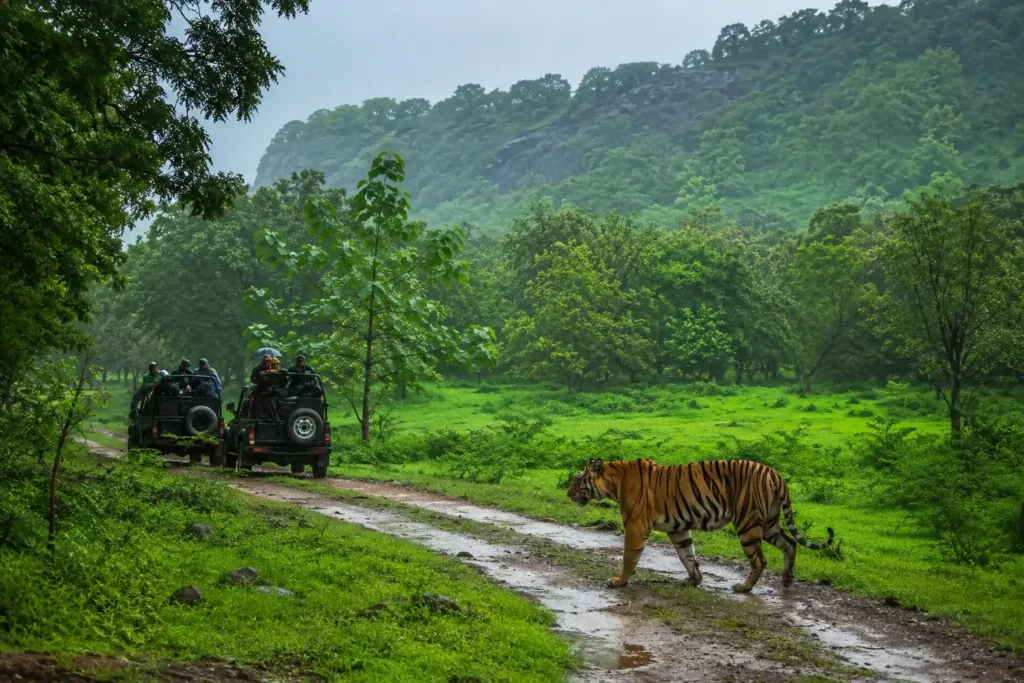
Experiencing a jungle safari in Ranthambore during this season offers a unique perspective of the park that few get to witness. As the landscape transforms into a vibrant, lush paradise, the quiet trails and mist-covered hills create an atmosphere of serenity, far removed from the bustling peak-season tourist paths.
Safari Operations: What Remains Open?
A common question for travelers is whether the park shuts down entirely. It is important to note that the core zones (Zones 1–5) are closed during this period to allow for forest rejuvenation and to respect the animal breeding season. However, this does not mean your adventure ends.
The monsoon in Ranthambore still welcomes visitors through the buffer zones (Zones 6–10). These areas remain operational, offering a different kind of safari experience. Because these zones are less frequented by the heavy tourist traffic seen in winter, you often get a more intimate, unhurried, and personalized wildlife viewing experience. While tiger sightings may be less frequent due to the dense, tall grass, the thrill of spotting a leopard, sloth bear, or various migratory birds against a rain-washed backdrop is incomparable.
Read More Blog: Why Ranthambore National Park Shines During the Monsoon
Why Experience Ranthambore in Monsoon?
If you are wondering why you should consider a trip during this off-season, here are a few expert reasons:
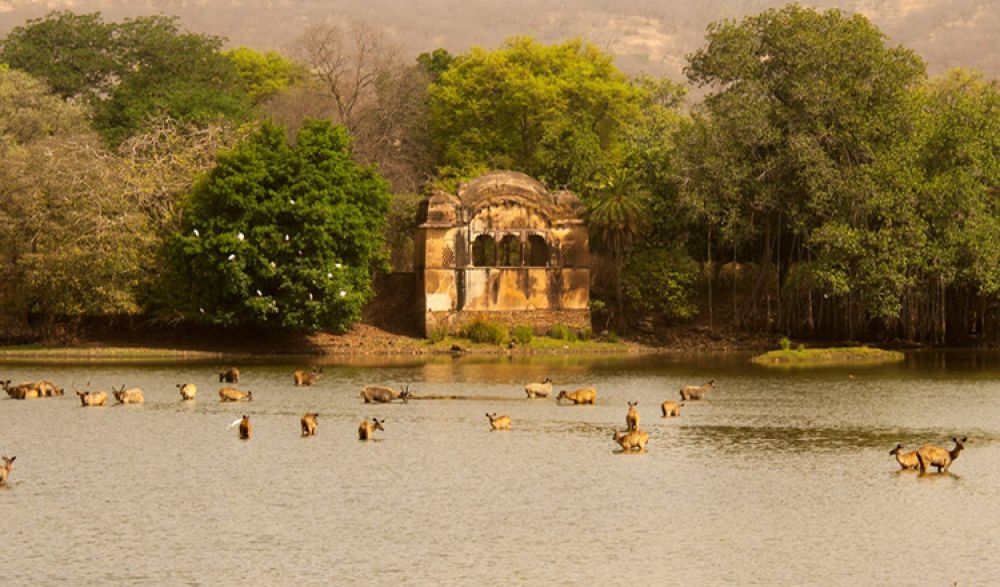
- Scenic Splendor: The contrast between the ancient ruins and the new, lush green vegetation is a photographer’s dream.
- Reduced Crowds: You won’t find yourself jostling for space with dozens of other vehicles. The silence of the forest is often broken only by the rain and the calls of the wild.
- Budget-Friendly Stays: Many luxury resorts and heritage stays in the area offer attractive discounts during the monsoon season in Ranthambore. It is an excellent time to experience premium hospitality at a fraction of the cost.
- Birdwatcher’s Paradise: The monsoon brings a surge of avian activity. Resident and migratory birds are highly active, making it a perfect time for enthusiasts to carry their binoculars.
Expert Tips for Your Monsoon Trip
To make the most of your Ranthambore in monsoon journey, follow these expert guidelines:
1. Plan Your Safari Carefully
Since safari availability is limited, always book your permits for the buffer zones well in advance. Do not wait until you arrive at the gate, as slots fill up quickly even in the off-season.
2. Gear Up for the Rain
Pack lightweight, quick-drying clothing and sturdy, waterproof footwear. Carry a good-quality rain poncho or an umbrella. Protecting your camera gear is equally important—bring weather-sealed bags or rain covers for your lenses to capture the stunning monsoon in Ranthambore vistas without fear of water damage.
3. Choose the Right Accommodation
Select a resort that is well-prepared for the rains. Many eco-lodges near the buffer zones offer a wonderful ambiance with balconies that overlook the rain-washed hills. Spending your evening in a cozy, scenic setting is one of the true highlights of visiting during this time.
4. Respect the Wildlife
Remember that this is the breeding season. Animals are more sensitive to their surroundings, and the forest is their sanctuary. Always maintain a respectful distance, keep noise levels low, and follow the instructions of your forest guide implicitly.
5. Explore Beyond the Safari
When you aren’t in the buffer zones, utilize your time to explore the region’s cultural heritage. The historic Ranthambore Fort, the Trinetra Ganesh Temple, and the local villages are incredibly beautiful when veiled in the monsoon mist.
Conclusion
While the best time to visit Ranthambore is traditionally considered to be between October and March, the monsoon in Ranthambore offers a rare, mystical experience that is often more rewarding for the observant traveler. By embracing the rain, respecting the park’s conservation efforts, and preparing for the unique conditions of the season, you can enjoy a side of this iconic national park that most tourists never get to see.
Whether you are a wildlife photographer, a nature lover, or simply looking for a quiet escape, the lush, green, and vibrant atmosphere of the monsoon is waiting for you. To truly elevate your experience, consider retreating to a luxury resort in Ranthambore, where you can unwind in comfort while surrounded by the serene, rain-drenched wilderness. From the comfort of your plush suite, you can listen to the rhythmic pitter-patter of the rain and witness the forest transforming into a verdant paradise, making your monsoon getaway both adventurous and indulgent.